

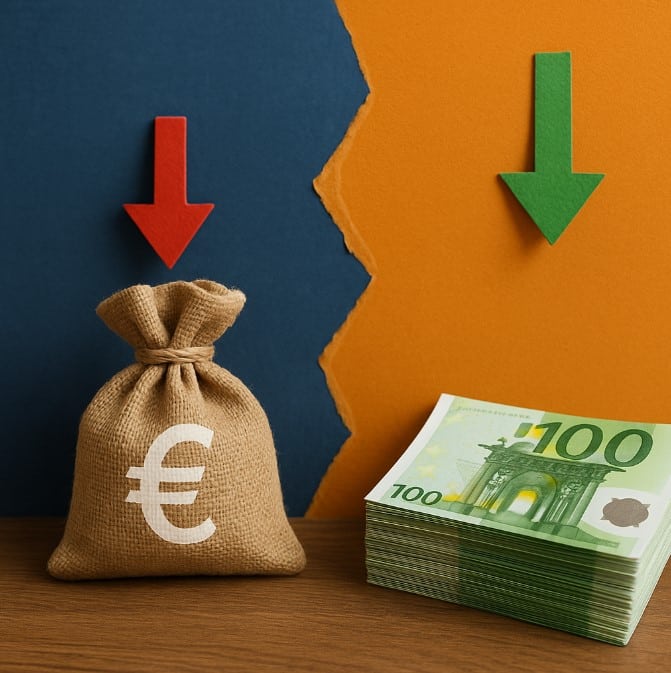
Consumers taking out personal loans in the Netherlands are facing a divided market in 2025. New data reveals a split in interest rate trends depending on the amount borrowed. While the cost of borrowing smaller amounts has increased over the past six months, interest rates for larger loans have actually decreased.
Financial comparison platform Geld.nl conducted research into the development of lending rates during the first half of 2025. Their findings indicate that individuals borrowing amounts such as €5,000 or €10,000 are paying slightly more interest now compared to the beginning of the year. Conversely, those securing loans of €20,000 or €50,000 are benefiting from lower rates.
Trends in Personal Loan Rates
The financial landscape for consumers seeking a personal loan netherlands has shifted since January. The data highlights a clear distinction between small consumer credit and substantial financing.
For smaller financial commitments, the cost of borrowing has crept upward. In January 2025, the average interest rate for a €5,000 loan stood at 11.03%. By June, this average had risen to 11.45%. A similar, though less dramatic, upward trend was observed for loans of €10,000.
In contrast, consumers borrowing larger sums have seen relief. The most significant drop occurred in the category for €50,000 loans. At the start of the year, the average rate for this amount was 7.98%. Six months later, that figure dropped to 7.39%. This divergence suggests that lenders are pricing risk and administrative costs differently across various loan brackets.
Market Volatility in Early 2025
The trajectory of interest rates was not a straight line during the first two quarters of the year. Geld.nl observed that rates for various loan amounts initially declined during the first quarter of 2025. However, this downward trend reversed sharply at the beginning of March.
Several macroeconomic factors contributed to this volatility. Capital market rates rose suddenly in the spring. Analysts attribute this increase to a combination of factors, including the looming threat of a trade war with the United States and ongoing geopolitical tensions. Additionally, the performance of the broader European economy lagged behind expectations, creating uncertainty in the financial markets.
Since mid-May 2025, the market has shown signs of stabilization. This calming effect is largely driven by market expectations regarding the European Central Bank (ECB). Investors and lenders anticipate that the ECB will continue to lower interest rates, which helps to suppress the cost of funding for consumer credit providers.
Stability in the Lowest Rates
Despite the fluctuations in average rates, the most competitive offers in the market have remained remarkably steady. While the average borrower might see changes, those qualifying for the absolute lowest rates have seen little difference between January and June.
Juul Klarenbeek, a lending expert at Geld.nl, notes that the overall picture remains relatively calm despite the recent divergence. According to Klarenbeek, lending rates have been generally stable for approximately eighteen months. The fluctuations seen in the first half of 2025, while notable for specific loan sizes, represent small shifts rather than a market overhaul.
One potential reason for the stagnation of the lowest rates is a narrowing of supply. As fewer providers compete for the bottom of the market, there is less pressure to drive rates down further, even when capital market conditions might allow for it.
Factors Influencing Large vs. Small Loans
The difference in pricing between small and large loans often comes down to the economics of lending. Administrative costs for processing a loan are relatively fixed, regardless of the loan size. For a €5,000 loan, these costs represent a larger percentage of the total, necessitating a higher interest rate to ensure profitability.
Furthermore, larger loans are often used for significant investments, such as home improvements or vehicle purchases. A borrower seeking a car loan netherlands for a substantial amount may undergo stricter credit checks, potentially resulting in a lower perceived risk profile for the lender. This allows financial institutions to offer more competitive rates for higher volumes.
Economic Outlook and Borrower Strategy
The stabilization of rates since May offers some predictability for consumers. The expectation of ECB rate cuts suggests that the upward pressure on lending rates may ease, particularly for larger amounts. However, the slight increase in costs for small loans indicates that lenders are becoming more cautious with unsecured consumer credit.
For consumers, this split market emphasizes the importance of comparison. The gap between the cheapest and most expensive providers can be significant. Using a loan calculator netherlands can help potential borrowers understand exactly how these percentage shifts impact monthly payments.
Broader Credit Market Context
The developments in the personal loan sector reflect broader trends in the Dutch credit market. The interplay between international trade tensions and domestic economic policy continues to shape the cost of money.
While the average rates for large loans have dipped, they remain higher than the historic lows seen in the previous decade. Consumers are adjusting to a “new normal” where borrowing costs are significant but stable. The slight rise in small loan rates may discourage impulse borrowing, pushing consumers to save for smaller purchases rather than financing them.
Loans in The Netherlands remains accessible, but the terms are increasingly dependent on the specific amount required. As the second half of 2025 progresses, market watchers will be monitoring whether the ECB’s actions will finally bring relief to the smaller loan segment or if the divergence will widen further.